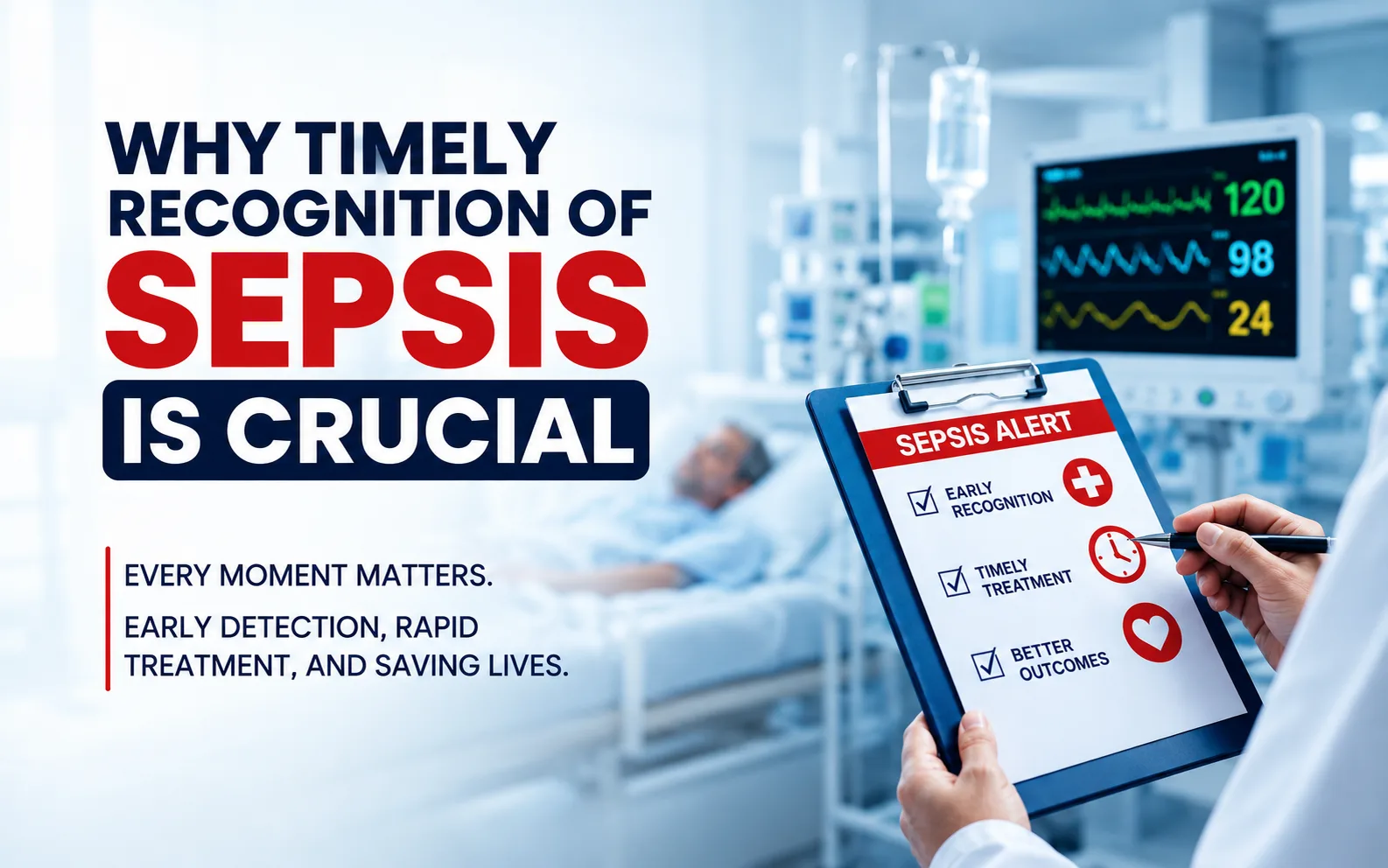
Sepsis is one of the most significant challenges facing hospitals and healthcare systems. However, sepsis detection can only improve patient outcomes when identifying at-risk patients is followed by a rapid and effective clinical response.
The substantial increase in hospitalizations associated with sepsis in recent years raises an important question: Does this increase reflect a true rise in disease prevalence, or is part of it related to changes in diagnosis, documentation, and coding practices?
A recent report published by Infection Control Today examines this issue from a different perspective. According to the report, successful sepsis management depends on more than advanced alert systems. It also depends on how quickly and effectively the clinical team responds after a sepsis alert is triggered.
Why Is Sepsis Detection Alone Not Enough?
Alert systems can help identify patients who may be at risk, but an alert by itself does not improve clinical outcomes.
The real value of early sepsis detection emerges when an alert is connected to a clearly defined workflow. The responsible staff need to know when to notify the clinical team, what actions should follow, and how the timing and completion of each step should be documented.
For this reason, hospitals need not only reliable detection technology but also a structured operational process for responding to alerts.
The Goshen Health Experience
Goshen Health in northern Indiana provides an example of this approach. Since 2022, the health system has used a clinical-rule-based system that continuously analyzes electronic health record data to identify patients who may be at risk for sepsis.
The system generates an alert when a combination of criteria is identified within a six-hour period, including:
Documented infection
At least two criteria associated with Systemic Inflammatory Response Syndrome (SIRS)
Signs of organ dysfunction or failure
However, the most important aspect of this experience was not simply the technology. It was how the sepsis alert was integrated into the hospital's clinical workflow.
Turning an Alert Into Action
After evaluating several approaches, the Goshen Health team found that assigning the alert notification process to unit secretaries could help accelerate communication with the clinical team.
When an alert was triggered, unit secretaries notified the physician and documented the relevant timing and actions. This process helped facilitate more consistent implementation of the standard sepsis protocol, including SEP-1.
In this model, technology was responsible for identifying potentially high-risk patients, while human staff helped connect the alert to the clinical team and the hospital's operational workflow.
Results During the First 15 Months
According to the published report, the approach was associated with the following results during its first 15 months:
An 11% increase in compliance with the SEP-1 protocol
A 36.7% reduction in protocol implementation defects compared with 2020
Approximately a 3-day reduction in the average length of stay among patients with septic shock, without an increase in reported mortality
These findings suggest that the success of a sepsis detection system should not be measured solely by how many alerts it generates. The speed and quality of the response following an alert are also critical components of the process.
The Key Message for Hospitals
A sepsis alert becomes more clinically valuable when it is connected to a clearly defined response process.
By combining real-time clinical data analysis, alert systems, and standardized workflows, hospitals can potentially reduce the gap between sepsis detection and clinical action.
Relying solely on retrospective data and administrative coding may also fail to provide a complete picture of sepsis within a hospital. Timely analysis of clinical data can support earlier identification of patients and faster initiation of appropriate clinical evaluation and treatment.
Conclusion
Early sepsis detection is not the end of the process. It is the beginning.
Technology can help identify patients who may be at risk, but the ultimate impact depends on how the alert is incorporated into the clinical workflow and how quickly and accurately the healthcare team responds.
The Goshen Health experience highlights how combining sepsis detection, timely alerts, and an organized clinical response can provide a practical approach to improving adherence to sepsis protocols.
Source
This article is based on a report published by Infection Control Today:
Beyond Alert: Why Sepsis Outcomes Come Down to What Happens After Detection—Infection Control Today