For years, many healthcare professionals entered infection prevention through nursing. Today, infection prevention careers are evolving into multidisciplinary, data-driven roles that welcome experts from microbiology, pharmacy, epidemiology, public health, and other clinical sciences.
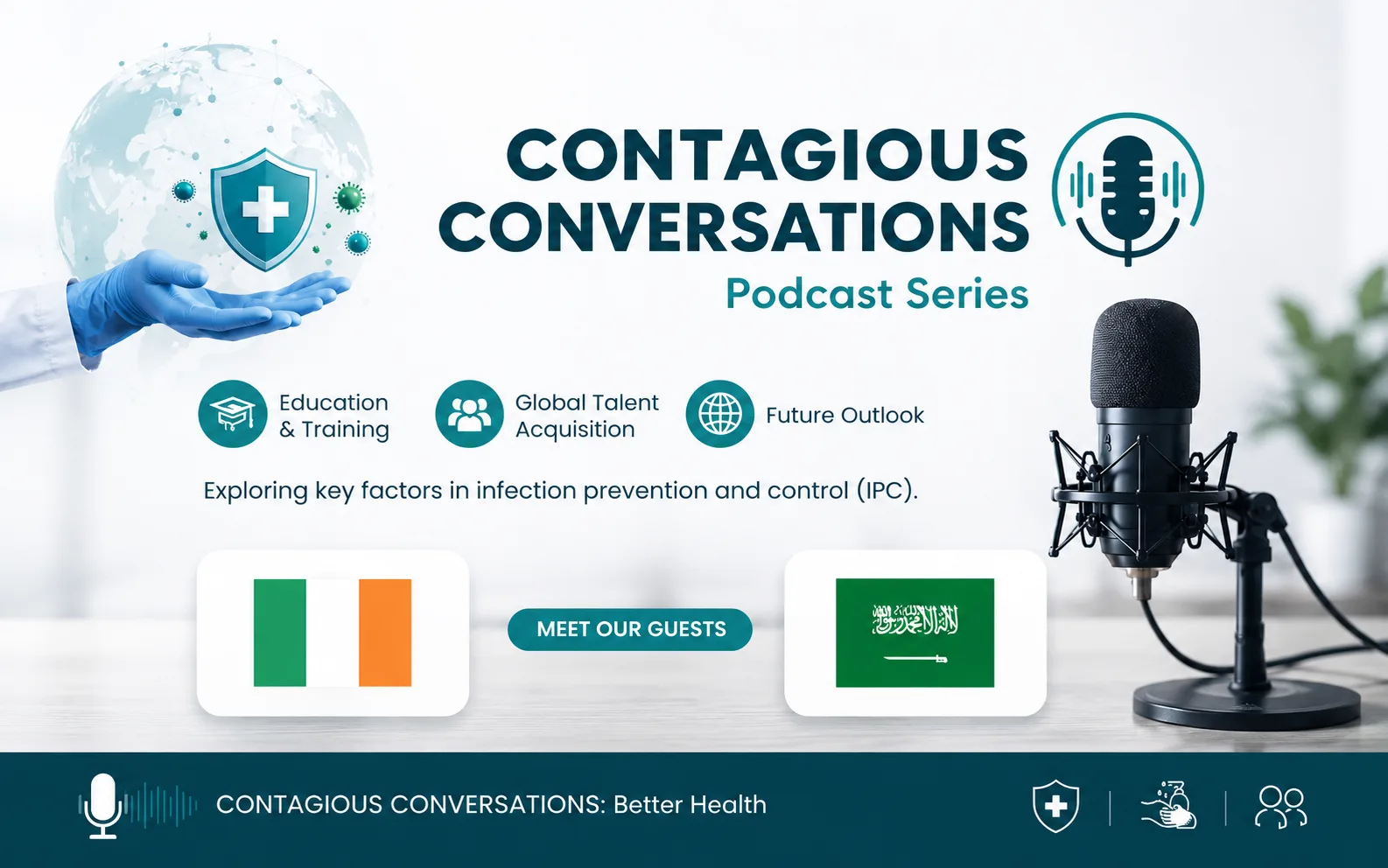
This shift became the focus of a recent Contagious Conversations podcast, where two internationally recognized IPC leaders discussed how education, recruitment, and professional development are reshaping the future of infection prevention worldwide.
A Profession with More Than One Entry Point
One of the strongest messages from the discussion was simple: there is no single route into infection prevention careers.
Brendan Dunne built his career through infectious diseases and tropical medicine before moving into infection prevention in Ireland.
Meanwhile, Mohammed Halawani discovered his passion during microbiology training, continued his development at Johns Hopkins Hospital, and later helped establish infection prevention programs in Saudi Arabia.
Although their journeys differed, both emphasized that modern IPC values practical expertise alongside academic training.
Why Infection Prevention Careers Are Becoming More Diverse
Healthcare systems have become more complex. As a result, infection prevention careers now require broader skills than ever before.
According to the speakers, today's IPC teams increasingly include:
Nurses
Microbiologists
Pharmacists
Epidemiologists
Public health specialists
Surveillance experts
Behavioral scientists
Veterinary and laboratory professionals
Dental specialists
In Ireland, nursing remains a major pathway. However, universities have expanded postgraduate education to attract professionals from multiple disciplines.
Saudi Arabia shows a similar trend. While nurses still represent a large portion of the workforce, microbiologists, physicians, laboratory scientists, and public health professionals are joining IPC teams in growing numbers.
Should Infection Prevention Remain Nursing-Led?
The podcast also addressed an ongoing international debate.
Should infection prevention remain primarily a nursing profession, or should recruitment expand across healthcare disciplines?
Both experts supported the second approach.
Dunne argued that future infection prevention careers will depend increasingly on epidemiology, surveillance, quality improvement, behavioral science, and data-driven decision-making.
Without these capabilities, IPC programs may struggle to keep pace with emerging healthcare challenges.
Building Dedicated Academic Pathways
Halawani proposed an even more ambitious vision.
He hopes universities will eventually establish dedicated undergraduate degrees in infection prevention instead of relying entirely on professionals entering later in their careers.
His proposed four- or five-year curriculum would combine:
Clinical nursing
Microbiology
Public health
Epidemiology
Specialized IPC training from the beginning of education
Such programs could create professionals whose expertise is designed specifically for modern infection prevention systems.
Certification vs Academic Degrees
Another interesting topic involved professional certification.
In the United States, credentials such as CIC (Certification in Infection Control) often carry significant professional value.
However, Ireland and Saudi Arabia still place greater emphasis on master's and doctoral qualifications during recruitment and career advancement.
Looking ahead, both speakers suggested that European infection prevention initiatives may eventually create broader certification frameworks across the region.
COVID-19 Changed Everything
The COVID-19 pandemic dramatically increased the visibility of infection prevention professionals.
Hospitals recognized the strategic importance of IPC during the crisis, and many healthcare workers became interested in pursuing infection prevention careers after witnessing their impact firsthand.
Importantly, the pandemic accelerated investment in surveillance, preparedness, education, and multidisciplinary collaboration.
The Future Depends on Diverse Career Pathways
The conversation concluded with a clear message.
The future of infection prevention careers will depend less on a single professional background and more on diverse expertise working toward a shared goal.
Whether professionals come from nursing, microbiology, pharmacy, epidemiology, laboratory sciences, or public health, multidisciplinary collaboration strengthens infection prevention systems.
As healthcare continues to evolve, education programs, recruitment strategies, and career pathways will likely become even more diverse, helping the profession respond to increasingly complex infection-control challenges.