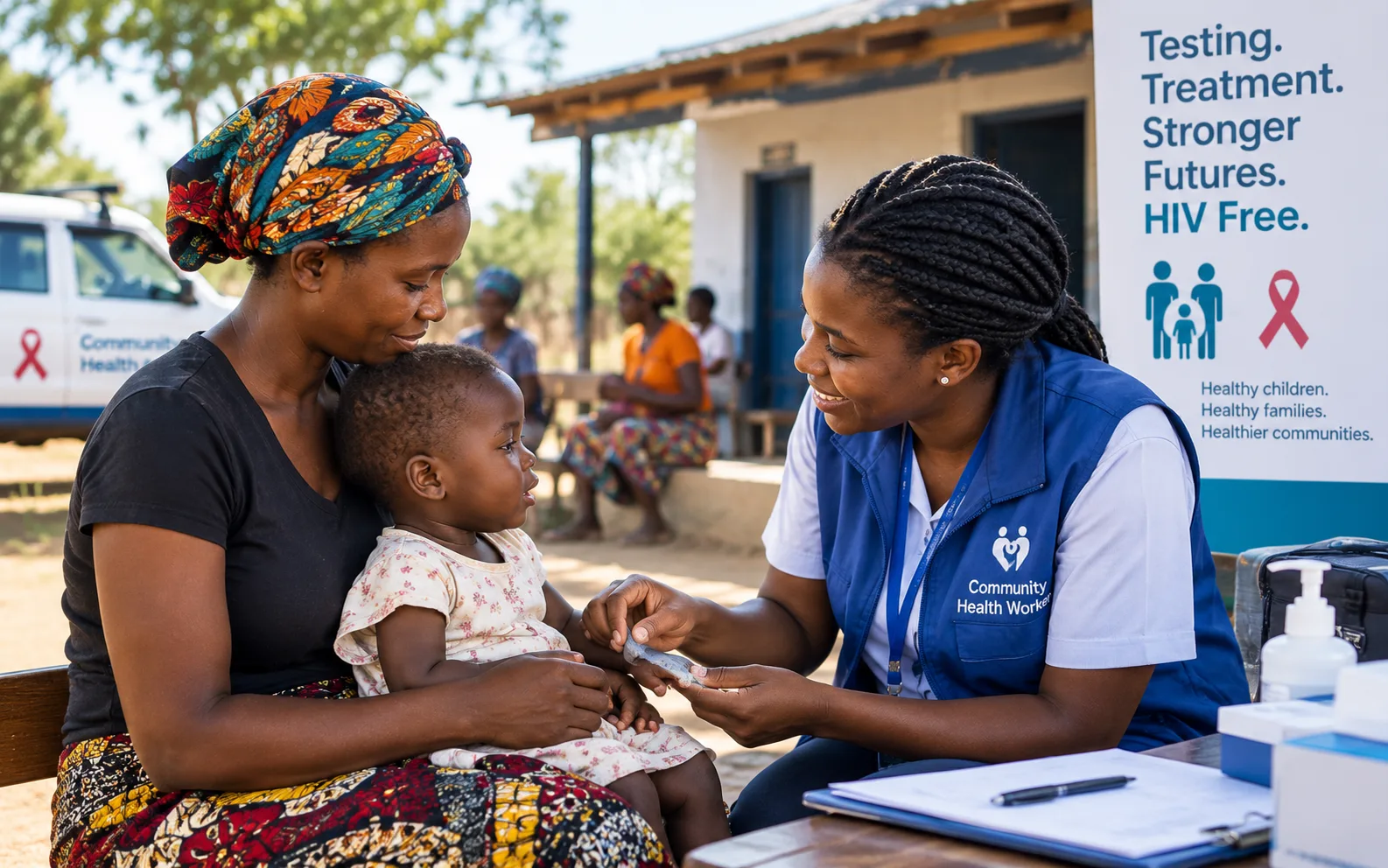
Malawi's progress toward controlling the HIV epidemic demonstrates how consistent diagnostic testing and access to treatment can contribute to epidemic control. However, important differences remain between adults and children.
For HIV care for children, one of the key challenges is ensuring that infants and children who miss testing, follow-up, or other critical steps in the care pathway are identified and returned to care. Community-based interventions can help address this gap by connecting vulnerable children and their families with clinical and social support.
In an interview with Infection Control Today®, Endale Tilahun, MD, MPH, Chief of Party for Project HOPE Namibia in Malawi, described how community health workers help vulnerable children and their families access healthcare and social services when facility-based care alone is not sufficient.
Connecting Children With HIV Care
As part of the program described in the report, 12 children were diagnosed with HIV. All 12 initiated treatment and were subsequently transitioned from services for infants exposed to HIV to programs specifically supporting children living with HIV.
Tilahun emphasized the effectiveness of HIV treatment and the importance of family support in helping children achieve healthier lives.
This highlights a central principle of HIV care for children: diagnosis is only the beginning of the care pathway. Children also need timely access to treatment, continued follow-up, and support from their families and communities.
The Role of Community Health Workers
Family support is a major component of the program. Community health workers maintain close communication with caregivers and help connect families with available health and social services.
The program is implemented in collaboration with Malawi's Ministry of Health and the Ministry responsible for gender, children, disability, and social welfare.
When healthcare facilities identify a child who has missed an important HIV testing step or failed to attend required follow-up, community-based teams can use this information to locate the family, understand the reasons behind the missed visit, and help reconnect the child with appropriate care.
As Tilahun explained, these teams serve as a bridge between the healthcare facility and the community.
Addressing Barriers to HIV Care
Access and transportation can represent significant barriers to healthcare. When necessary, community-based teams can help families reach healthcare facilities, including when children require medical evaluation because of opportunistic infections or other health concerns.
This approach recognizes that effective pediatric HIV care involves more than providing medication. Social circumstances, transportation, family support, and access to healthcare services can all influence whether children remain connected to care.
By addressing these barriers at the community level, health programs can help reduce the number of children who are lost to follow-up.
The Remaining Gap in Pediatric HIV Care
Despite progress in Malawi's HIV response, differences between adults and children remain.
According to Tilahun, Malawi has reached the 95-95-95 targets among adults. These targets refer to:
95% of people living with HIV knowing their HIV status
95% of people diagnosed with HIV receiving antiretroviral treatment
95% of people receiving treatment achieving viral suppression
However, the reported level of viral suppression among children is approximately 84%, indicating a remaining gap in pediatric HIV care.
For public health and infection prevention professionals, this difference illustrates a broader challenge: healthcare strategies focused primarily on facilities may not identify and retain every vulnerable patient who needs continued care.
Finding Children Who Have Fallen Out of Care
Tilahun emphasizes the importance of identifying and following children who have missed critical points in the HIV care pathway.
From a public health perspective, community-based follow-up can function as a final link between healthcare systems and people who have become disconnected from care.
The goal is not simply to identify more cases. It is to ensure that children who need HIV testing, treatment, and follow-up remain connected to the services required to achieve better health outcomes.
Lessons Beyond HIV
The experience described in Malawi has implications beyond HIV.
Effective disease prevention and control may require health systems to identify people who have fallen out of the care pathway, understand why they became disconnected, and develop practical ways to bring healthcare services closer to the communities they serve.
For children in particular, this may require stronger coordination between healthcare facilities, families, community health workers, and social support systems.
Conclusion
Malawi's experience highlights the importance of maintaining continuity throughout the HIV care pathway.
For HIV care for children, identifying missed testing and follow-up is only one part of the solution. Reconnecting children with treatment, supporting caregivers, and addressing practical barriers such as transportation can help strengthen continuity of care.
More broadly, the experience demonstrates how community-based healthcare can complement facility-based services by reaching people who might otherwise remain outside the healthcare system.